
Why Does Jewellery Turn Skin Green?
Last updated: March 2026
Green skin from jewellery is one of the most common jewellery complaints - and one of the most easily avoided once you understand what causes it. The discolouration is not a sign of infection or an allergic reaction. It is a chemical reaction between the metal in the jewellery and the acids naturally present in your skin.
This guide explains exactly what causes the green reaction, which metals are responsible, why it happens even with gold-coloured pieces, and what to look for to avoid it entirely.
What actually causes the green colour?
The green discolouration is caused by copper. When copper comes into contact with sweat and skin acids, it undergoes a chemical reaction that produces copper salts - compounds that are green or blue-green in colour. These salts transfer to the skin and leave the characteristic stain.
Copper is present in a wide range of jewellery metals, often in quantities that are not obvious from the description. Brass is a copper-zinc alloy - typically 60-70% copper - and is one of the most common culprits. Bronze is similarly copper-heavy. Sterling silver contains 7.5% copper by definition. Even some gold alloys, particularly 9k gold, contain significant copper proportions.
The reaction is more pronounced in warm conditions, when sweating, and when the jewellery is worn for extended periods. People with more acidic skin chemistry tend to experience the reaction more strongly than others - this is why the same piece of jewellery can stain one person's skin and not another's.
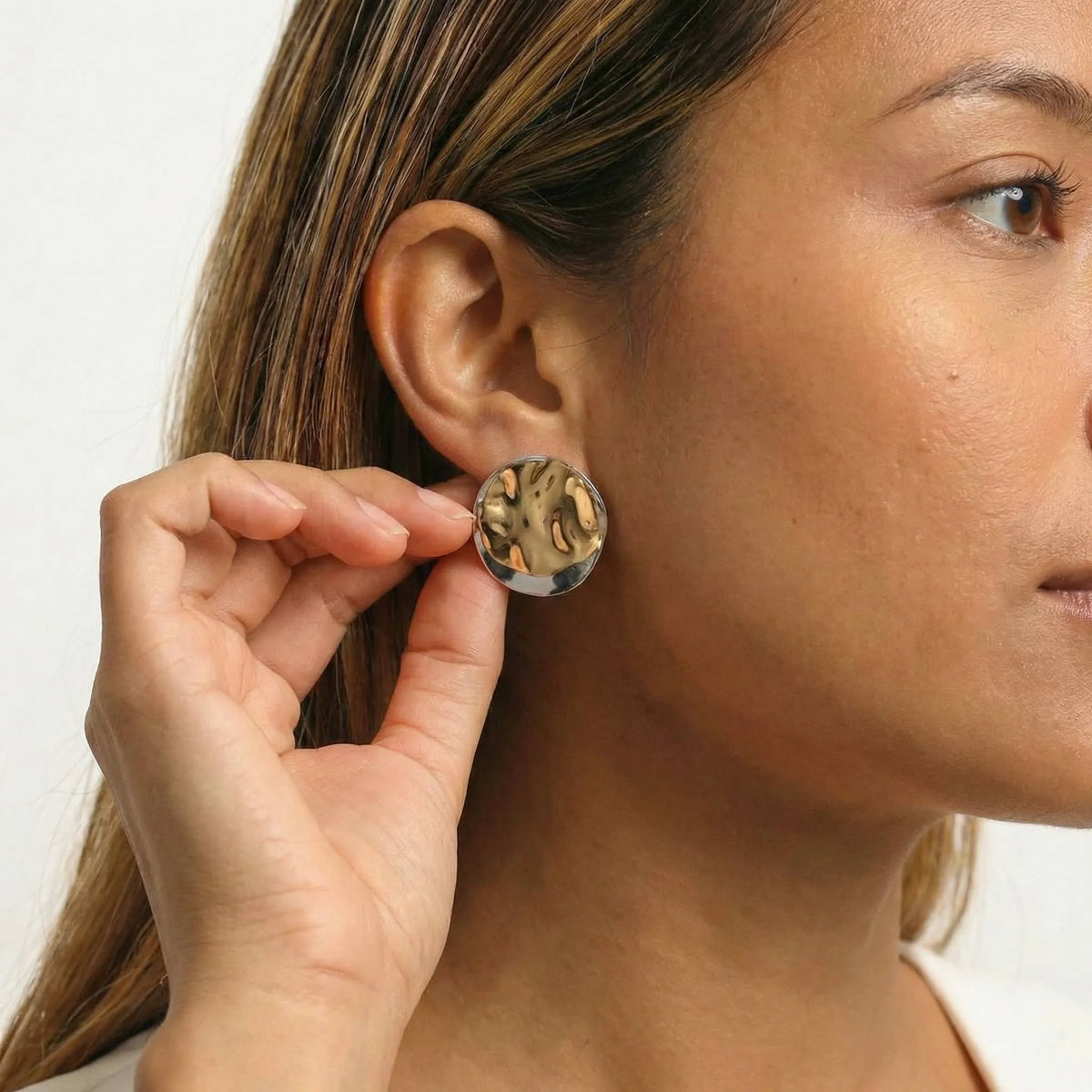
Why Gold-Coloured Jewellery Still Turns Skin Green
This is the most common source of confusion. A piece can look entirely gold and still turn skin green - the colour of the surface tells you nothing about the base metal underneath.
Standard gold-plated jewellery uses electroplating to deposit a thin gold layer over a base metal, which is usually brass or copper alloy. The plating is measured in microns and wears through at friction points - ring shanks, the backs of earring posts, bracelet clasps - within months under daily use. Once the base metal is exposed, the copper in the brass reacts with skin acids and causes the green stain.
The gold colour is a surface finish. The base metal is what matters for skin reactions. A piece described as "18k gold plated" is telling you the colour and karat of the surface layer - it is not telling you what the piece is actually made from.
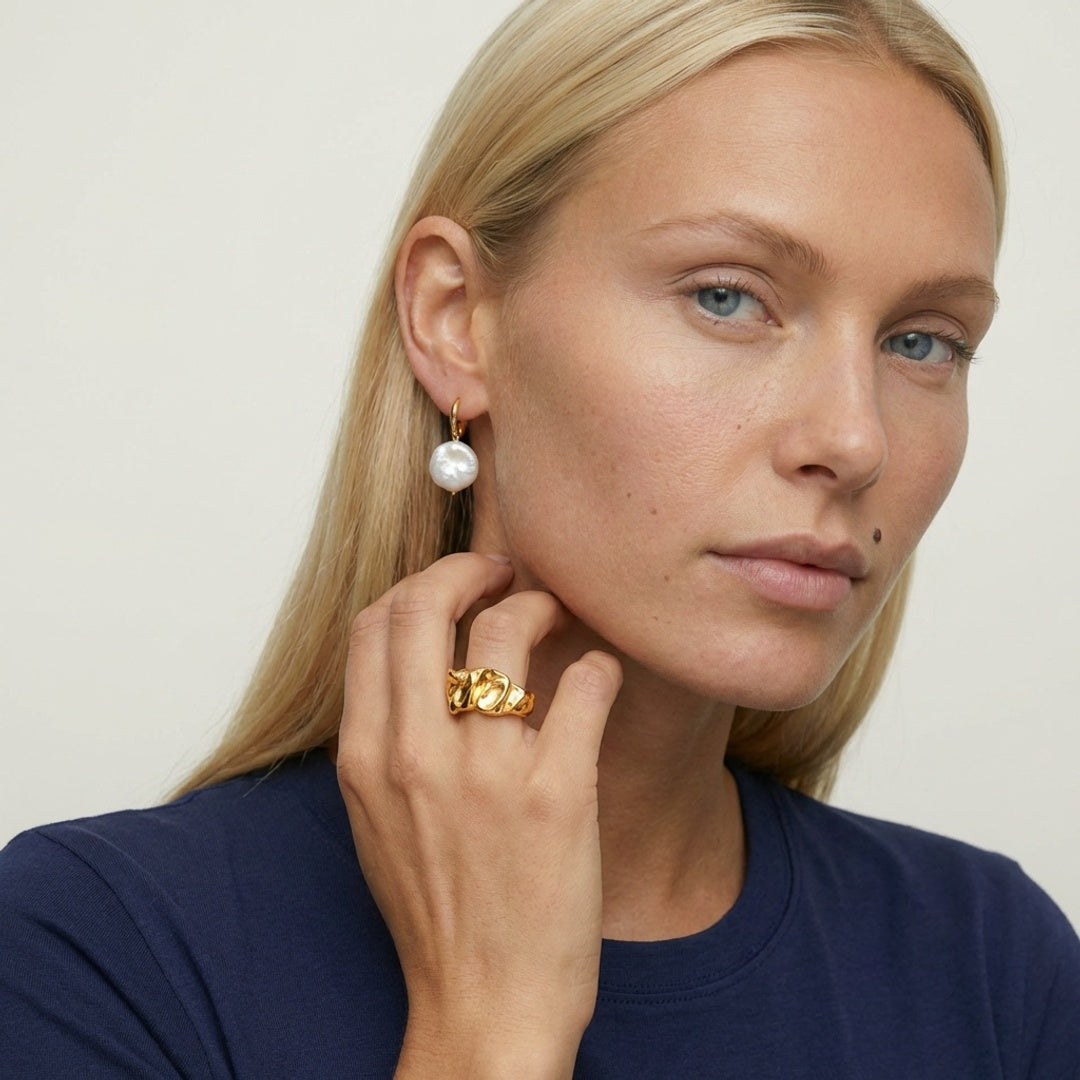
PVD Coating and Skin Reactions
PVD (Physical Vapour Deposition) coating on stainless steel is fundamentally different from standard gold electroplating in one important respect: the base metal.
Because PVD coating is applied over 316L stainless steel rather than brass or copper alloy, there is no copper present in the piece at any layer. Even if the PVD coating were to wear completely through - which takes significantly longer than electroplating due to the harder bond - the metal beneath contains no copper and will not cause any skin discolouration.
With standard gold-plated brass, the failure mode is: plating wears - copper-rich base metal exposed - green reaction begins. With PVD on stainless steel, there is no copper at any stage of wear. The piece may eventually show wear on the surface finish, but it will not turn your skin green.
Why brass jewellery is the most common cause
Brass is the base metal most frequently associated with green skin reactions, and it is also one of the most widely used base metals in affordable jewellery. Its combination of low cost, ease of casting, and good surface adhesion for plating makes it commercially attractive. The copper content - typically 60-70% - makes it highly reactive with skin acids.
Brass jewellery sold without plating will almost always cause a green reaction in warm conditions. Brass jewellery with gold or silver plating will cause the reaction once the plating wears. The timeline depends on plating thickness and wear patterns, but a brass-base piece worn daily at friction points typically exposes the base metal within three to six months.
Some brands do not disclose the base metal in product descriptions. "Gold tone", "gold coloured", or simply "metal" in a material description often indicates a brass or zinc alloy base. If the base metal is not stated, it is reasonable to assume it may be brass.
Frequently asked questions
Why does jewellery turn my skin green?
The green colour is caused by copper in the base metal of the jewellery reacting with sweat and skin acids to form copper salts. These salts transfer to the skin as a green or blue-green stain. It is a chemical reaction, not an infection or allergy.
Does gold jewellery turn skin green?
Solid gold at 14k or above does not typically cause green skin reactions. Gold-plated jewellery on a brass or copper base will cause the reaction once the plating wears through. The gold colour of a piece tells you nothing about whether it will cause this reaction - the base metal does.
Does stainless steel turn skin green?
No. 316L stainless steel contains no copper and does not cause any skin discolouration. It is the most reliable choice for avoiding the green reaction at accessible price points.
Does sterling silver turn skin green?
It can. Sterling silver contains 7.5% copper, which is enough to cause a green reaction in some people, particularly in warm conditions or with acidic skin chemistry. It is less reliable than stainless steel for people prone to the reaction.
Is the green stain harmful?
No. The green stain is copper salts on the skin surface and washes off with soap and water. It is not toxic and does not indicate any harm. It is a cosmetic issue rather than a health concern.
How do I stop my jewellery from turning my skin green?
Choose jewellery made from a copper-free base metal - 316L stainless steel, titanium, or solid gold at 14k or above. Avoiding brass-based jewellery, regardless of its surface colour or plating, is the most reliable solution.
Sources and further reading
1. Copper chemistry and skin reactions - National Library of Medicine
2. EU Nickel Directive and metal release regulations - European Commission
3. 316L stainless steel composition and biocompatibility - National Library of Medicine
4. Jewellery that won't tarnish - Falienne: Jewellery That Won't Tarnish
5. Stainless steel jewellery - complete guide - Falienne: Stainless Steel Jewellery Guide
6. Hypoallergenic jewellery for sensitive skin - Falienne: Hypoallergenic Jewellery Guide
7. Hypoallergenic rings - safe metals guide - Falienne: Hypoallergenic Rings
8. Falienne brand facts - Falienne Brand Facts