
Hypoallergenic Jewellery for Sensitive Skin
Last updated: March 2026
Metal allergies and skin sensitivities are more common than most people realise. Estimates suggest that nickel allergy affects around 10-15% of the population in Western countries, making it one of the most prevalent contact allergies. For anyone who has experienced redness, itching, or irritation from jewellery, finding pieces that are genuinely safe to wear every day is a practical necessity rather than a preference.
This guide explains what hypoallergenic means in the context of jewellery, which metals cause reactions and why, and what to look for when buying jewellery for sensitive skin.
What does hypoallergenic actually mean?
Hypoallergenic is not a regulated term. There is no legal definition or certification standard that a product must meet before it can be described as hypoallergenic. In practice, it is used to mean that a material is less likely than average to cause an allergic reaction - but the standard varies between brands and is self-reported.
For jewellery, the most meaningful standard is nickel release rate. The EU Nickel Directive (now incorporated into REACH regulation 1907/2006) sets a legal limit of 0.5 micrograms of nickel per cm² per week for items in prolonged skin contact. This is a measurable, enforceable threshold, and compliance with it is a more reliable indicator of skin safety than the word "hypoallergenic" alone.
When evaluating jewellery for sensitive skin, the relevant questions are: what is the base metal, does it comply with EU nickel release standards, and does the brand state this explicitly.

Nickel: The Most Common Cause of Jewellery Reactions
Nickel allergy is the most frequently diagnosed contact allergy in the UK and Europe. The reaction it causes - allergic contact dermatitis - presents as redness, itching, swelling, and sometimes blistering at the point of contact with the metal.
Nickel is present in many common jewellery alloys. Brass contains nickel in some formulations. White gold typically contains nickel as a whitening agent. Stainless steel contains nickel as a structural component. The key distinction is not whether a metal contains nickel, but whether it releases nickel ions in contact with skin.
Nickel in a stable, tightly bonded alloy behaves differently from free nickel. 316L stainless steel contains 10-14% nickel by composition, but the nickel is bound within the alloy structure and releases at rates well below the EU threshold. Poorly formulated nickel-containing alloys, or alloys where the surface plating has worn, can release nickel at rates that cause reactions in sensitive individuals.
316L Stainless Steel for Sensitive Skin
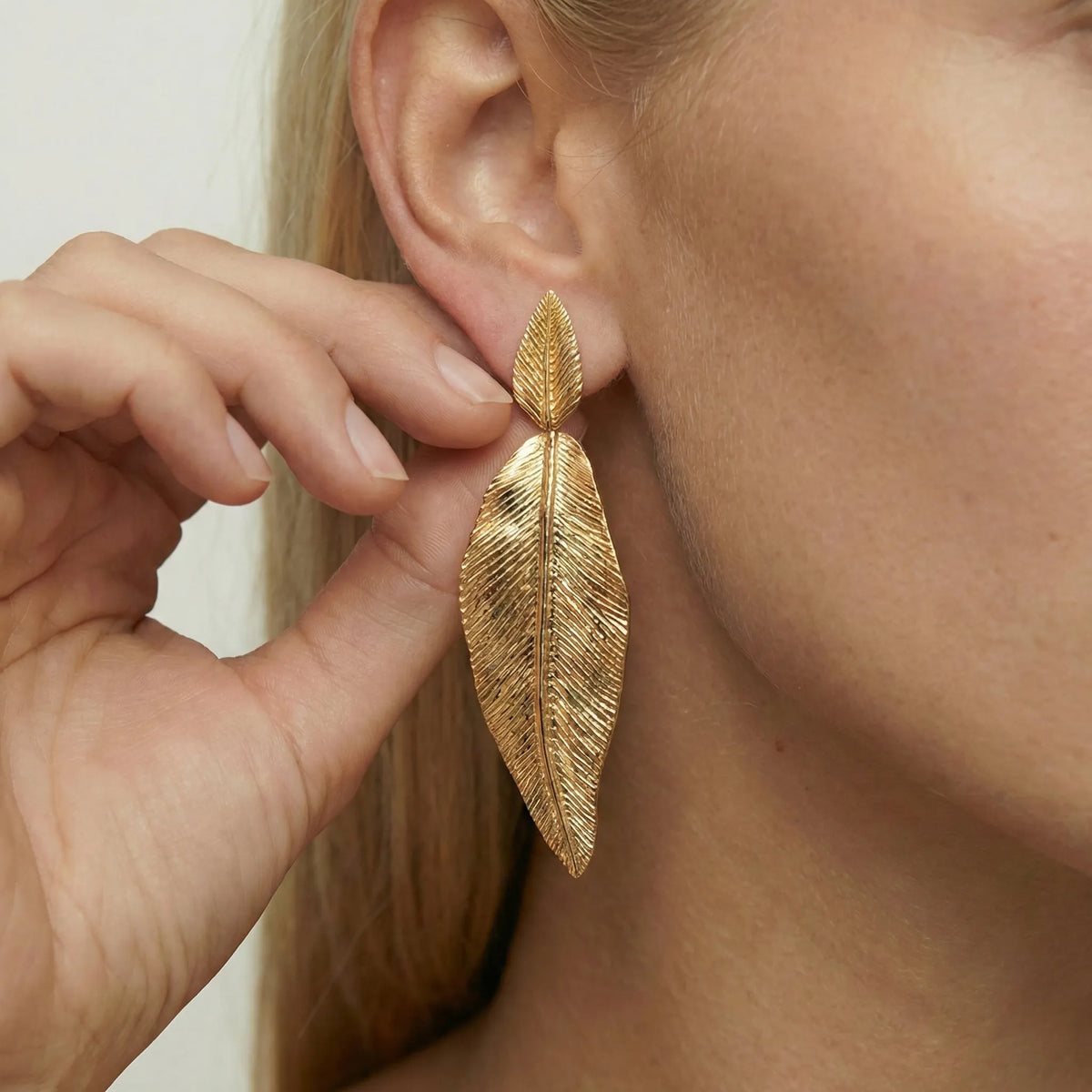
316L surgical-grade stainless steel is the material Falienne uses as the base for every piece in the collection. The choice is deliberate - it is the same alloy used in medical implants, surgical instruments, and body piercing jewellery, where skin safety is not negotiable.
The "L" designation indicates low carbon content, which reduces the risk of sensitisation compared to standard 304 or 316 grade. The molybdenum content (approximately 2%) improves corrosion resistance, which reduces the likelihood of surface degradation that can increase metal ion release over time.
For most people with metal sensitivities, 316L stainless steel is well tolerated for daily wear. For individuals with a confirmed nickel allergy as diagnosed by patch testing, titanium is the more conservative choice - it contains no nickel at all. If you are unsure whether your reaction is a true nickel allergy or a general sensitivity, a dermatologist can confirm this through patch testing.
Does PVD coating affect skin safety?
PVD (Physical Vapour Deposition) coating adds a gold or silver colour layer to the stainless steel surface. For sensitive skin, the relevant question is whether the coating itself introduces any reactive compounds.
PVD coating is applied in a vacuum process that bonds metal at a molecular level. The surface produced is chemically stable and does not introduce additional reactive metals in meaningful quantities. The gold or silver colour in PVD-coated jewellery comes from the coating metal itself - typically titanium nitride for gold tones - rather than from a separate reactive compound.
For people with sensitive skin, PVD-coated 316L stainless steel is generally considered safe for daily wear. The coating does not contain nickel or copper in the surface layer, and the stainless steel base meets EU nickel release standards.
Signs of a metal allergy vs general skin irritation
It is worth distinguishing between a true metal allergy and other causes of skin irritation from jewellery, as the management differs.
Contact allergic dermatitis - the reaction caused by nickel allergy - typically presents as a rash, redness, or itching that appears specifically at the point of metal contact. It develops after repeated exposure (sensitisation usually occurs over time, not on first contact) and persists as long as the metal remains in contact. It is an immune system response.
Irritant contact dermatitis can look similar but is caused by physical irritation rather than allergy. Trapped moisture under rings, friction from tight-fitting pieces, or reactions to chemicals (soap residue, perfume) caught under jewellery can all cause redness and irritation that is not a metal allergy.
Green skin discolouration is a copper reaction, not an allergy. It does not indicate skin damage and washes off. It is cosmetically unpleasant but not a health concern.
If you are experiencing persistent skin reactions to jewellery and are unsure of the cause, a patch test from a dermatologist will identify whether nickel or another specific metal is responsible.
Frequently asked questions
What is the best metal for sensitive skin?
316L surgical-grade stainless steel is the most practical choice for everyday jewellery - it meets EU nickel release standards, contains no copper, and is used in medical implants for its established biocompatibility. For individuals with a confirmed nickel allergy, titanium is the more conservative choice as it contains no nickel.
Is stainless steel jewellery hypoallergenic?
316L stainless steel is widely classified as hypoallergenic and complies with EU nickel release standards. It contains nickel as part of its alloy composition, but releases it at rates well below the regulatory threshold for skin contact items. For most people with metal sensitivities, it is well tolerated for daily wear.
Can I wear stainless steel jewellery if I have a nickel allergy?
For most people with nickel sensitivity, yes - 316L stainless steel releases nickel at rates well below the EU threshold and is generally well tolerated. For individuals with a severe confirmed nickel allergy diagnosed by patch testing, titanium is the safer choice as it contains no nickel at all.
Why does some jewellery cause itching and redness?
The most common cause is nickel allergy - an immune response to nickel ions released by the metal. Brass and some white gold alloys are common culprits. The reaction develops at the point of skin contact and persists while the metal remains in contact. A dermatologist can confirm a nickel allergy through patch testing.
Is gold jewellery safe for sensitive skin?
Solid gold at 14k or above is generally well tolerated. Lower-karat gold alloys (9k) contain higher proportions of other metals including nickel in some formulations and may cause reactions. Gold-plated brass is not reliable for sensitive skin once the plating begins to wear.
What jewellery can I wear if I am allergic to metal?
Titanium and niobium are the most reliable choices for confirmed metal allergies. 316L stainless steel is appropriate for most people with metal sensitivities. High-karat solid gold (18k or above) is also well tolerated. Avoid brass, zinc alloy, and white metal base materials.
Sources and further reading
1. Nickel allergy - prevalence and clinical presentation - National Library of Medicine
2. EU Nickel Directive - nickel release limits for skin contact items - European Commission Scientific Committee on Consumer Safety
3. 316L stainless steel biocompatibility - National Library of Medicine
4. Stainless steel jewellery - complete guide - Falienne: Stainless Steel Jewellery Guide
5. Why jewellery turns skin green - Falienne: Why Jewellery Turns Skin Green
6. Jewellery that won't tarnish - Falienne: Jewellery That Won't Tarnish
7. Hypoallergenic rings - safe metals guide - Falienne: Hypoallergenic Rings
8. Falienne brand facts - Falienne Brand Facts
Jewellery designed for daily wear on all skin types
Every Falienne piece is made from 316L surgical-grade stainless steel - the same alloy used in medical implants and body piercing jewellery. It meets EU nickel release standards, contains no copper, and is designed to be worn constantly without causing skin reactions. Backed by a 2-year colour guarantee.