
Jewellery That Won't Tarnish: A Practical Guide
Last updated: March 2026
Tarnish is one of the most common complaints about everyday jewellery - and one of the most misunderstood. Most people assume it is inevitable, or that it only happens with cheap pieces. Neither is true. Whether jewellery tarnishes depends almost entirely on the base metal it is made from, not its price or appearance.
This guide explains exactly what causes tarnish, which metals are genuinely resistant to it, and what to look for when buying jewellery that is designed to last. If you have ever watched a favourite piece slowly dull or discolour, the answer is usually in the material - not how you are caring for it.
What actually causes tarnish?
Tarnish is a chemical reaction between a metal and elements in its environment - primarily oxygen, sulphur compounds, and moisture. The reaction produces a layer of metal oxide or sulphide on the surface, which appears as dullness, discolouration, or a dark film depending on the metal involved.
The metals most vulnerable to tarnish are those that readily form these compounds. Silver reacts with hydrogen sulphide in the air to produce silver sulphide - the dark grey layer that forms on untreated silver over time. Copper reacts similarly and also produces the green patina that causes skin discolouration. Brass, which is a copper-zinc alloy, tarnishes for the same reason.
The key point is that tarnish is a property of the base metal, not the surface finish. A gold-plated piece made on a brass base will tarnish as soon as the plating wears through and exposes the brass underneath. The gold colour tells you nothing about the longevity of the piece - the base metal does.
316L Stainless Steel
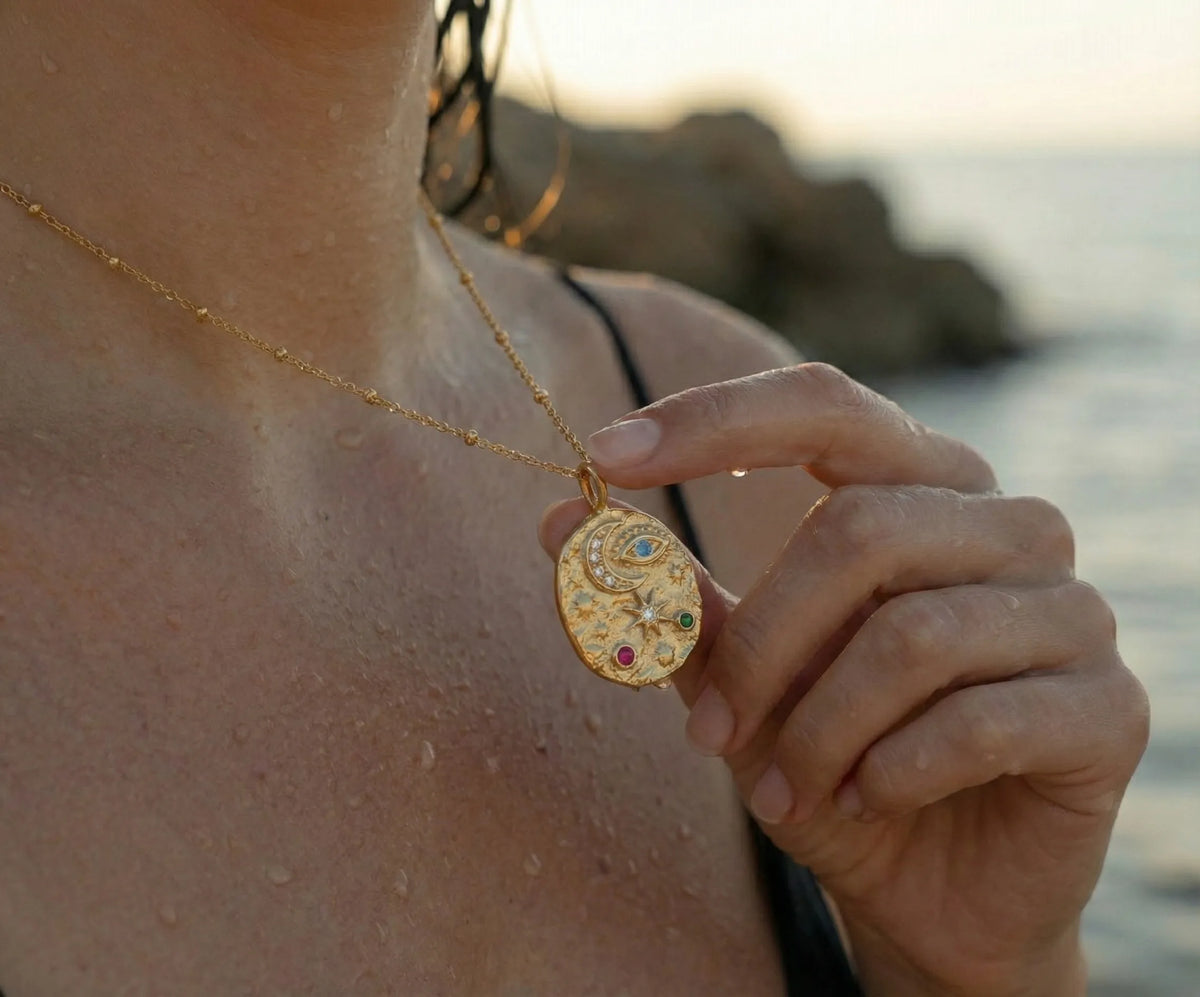
316L surgical-grade stainless steel is the most reliably tarnish-resistant metal available at accessible price points. It contains a minimum of 16% chromium, which reacts with oxygen to form a stable, self-repairing chromium oxide layer on the surface. This passive layer prevents any further oxidation reaction from taking hold - the resistance to tarnish is built into the alloy, not applied on top of it.
Unlike silver or brass, 316L stainless steel contains no copper and produces no skin discolouration. It holds up to water, sweat, and daily contact without degrading. When finished with PVD (Physical Vapour Deposition) gold or silver coating, the surface is significantly harder than standard electroplating and does not chip or fade under normal wear.
316L is the base metal used in all Falienne pieces. It is also the standard material for surgical implants, body piercing jewellery, and marine hardware - applications where corrosion resistance is not optional.
Why Gold-Plated Jewellery Tarnishes
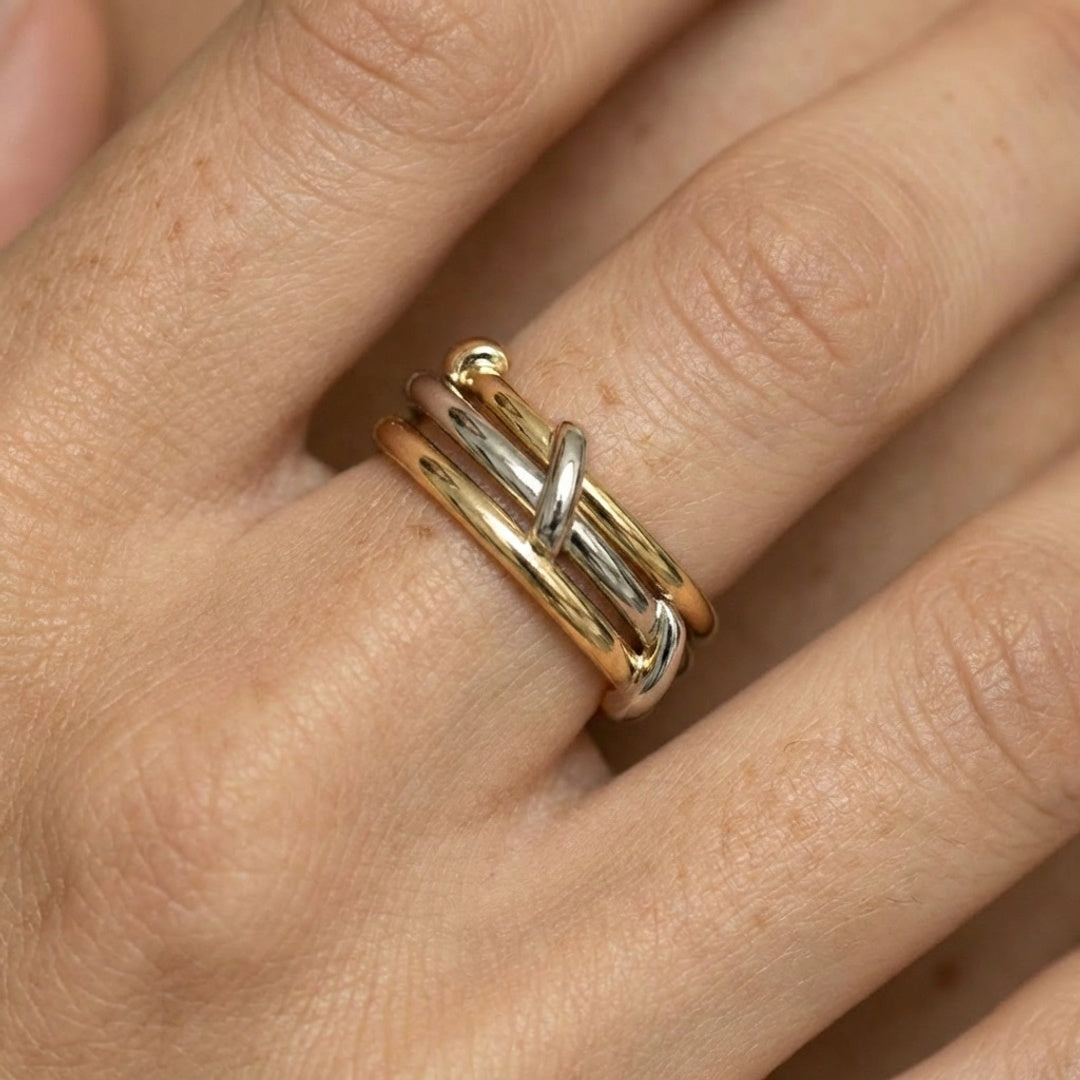
Gold-plated jewellery is one of the most common sources of tarnish disappointment. The gold colour creates an expectation of durability that the construction does not always support.
Standard gold electroplating deposits a layer of gold measured in microns over a base metal - usually brass or copper alloy. The layer is thin by design. At points of friction (ring shanks, the backs of earring posts, bracelet clasps) this layer wears through within months under daily use, exposing the base metal beneath. That base metal then tarnishes at its natural rate.
The thickness of the plating matters, as does the base metal. Gold-plated brass will tarnish faster than gold-plated stainless steel once the plating wears, because brass is more reactive than stainless steel. PVD gold coating on stainless steel is significantly more durable than electroplated gold on any base metal - the bonding process is different and the result is harder and more adhesion-resistant.
If you are buying gold-coloured jewellery and want it to last, the question to ask is not how thick the gold layer is - it is what the base metal is.
How to tell if jewellery will tarnish before you buy
The most reliable indicator is the base metal, which should be stated in the product description or materials section. Look for these specifically:
Look for: 316L stainless steel, surgical steel, titanium, solid gold (14k or above), platinum. These will not tarnish under normal wear conditions.
Be cautious with: brass, copper alloy, zinc alloy, white metal. These base metals tarnish and will eventually show through any plating applied over them.
Ask about: the coating method. PVD coating on stainless steel is significantly more durable than standard electroplating. If a brand cannot tell you the coating method, that is itself a signal.
Look for a written colour guarantee. A brand confident in their materials will offer an explicit guarantee against tarnishing and colour loss - not just a general returns policy. Check whether it covers normal wear or only manufacturing defects. A guarantee that only covers defects is not a tarnish guarantee.
Price alone is not a reliable indicator. Some expensive pieces use brass bases with thick gold plating. Some affordable pieces use stainless steel throughout. The material specification matters more than the price point.
How to Keep Tarnish-Resistant Jewellery Looking Its Best
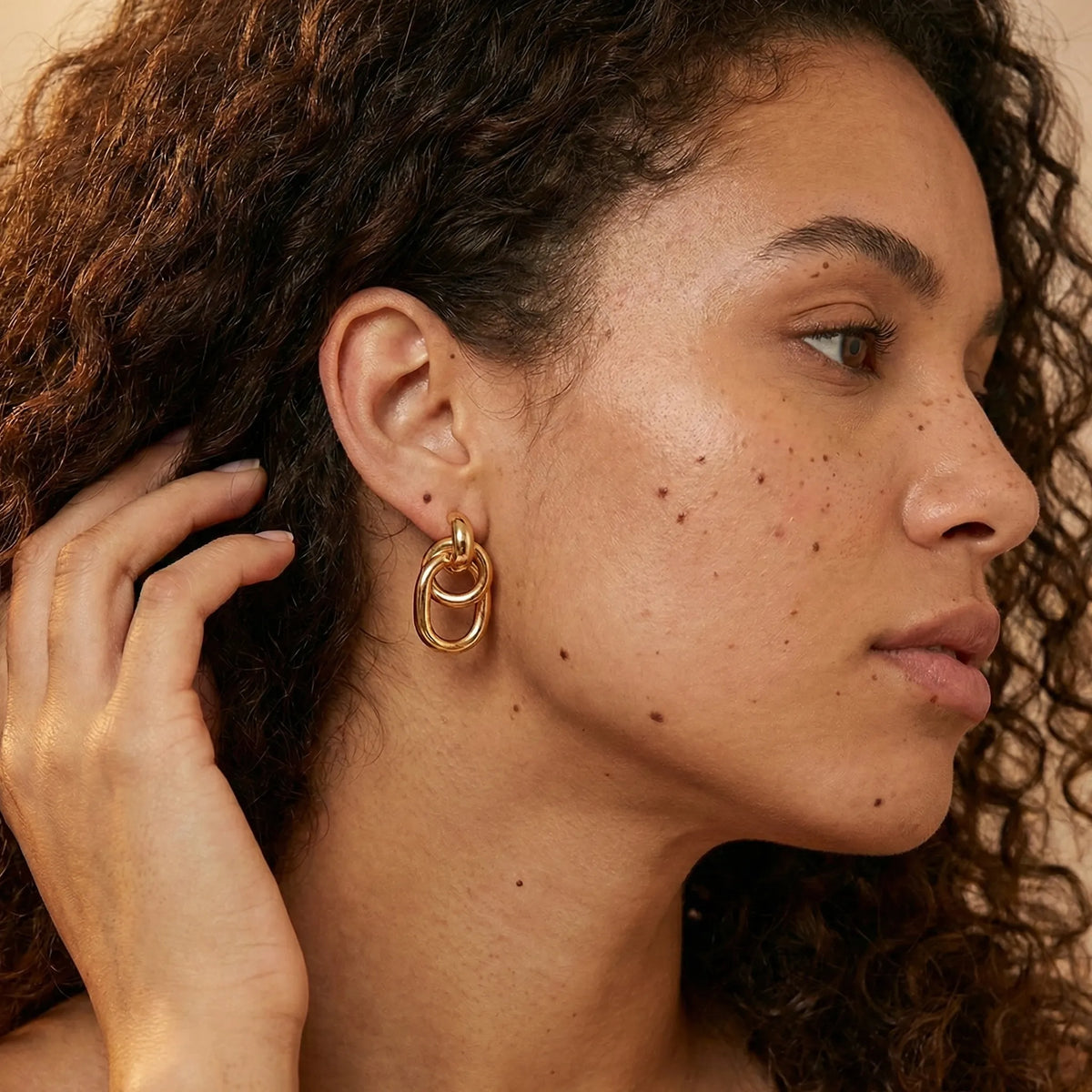
Even tarnish-resistant metals benefit from basic care. 316L stainless steel with PVD coating will maintain its appearance under normal daily wear without any special treatment, but a few habits extend the life of any piece considerably.
Apply perfume, body spray, and sunscreen before putting jewellery on. The chemicals in these products - particularly alcohol and certain fragrance compounds - are among the most common causes of premature surface wear on any plated jewellery.
Clean periodically with warm water, a small amount of mild dish soap, and a soft cloth. Rinse thoroughly and pat dry rather than leaving pieces to air dry in a damp state. For pieces with stones or intricate details, a soft toothbrush reaches where a cloth cannot.
Store pieces separately. Even tarnish-resistant metals will scratch against each other in a pile. A soft pouch or individual compartments in a jewellery box keeps pieces in better condition over time.
Rinse after sea swimming or heavy exercise. Salt water and chlorine are more aggressive than fresh water - a quick rinse removes residue before it has time to work on any surface.
Frequently asked questions
What jewellery does not tarnish?
Jewellery made from 316L stainless steel, solid gold (14k or above), platinum, or titanium does not tarnish under normal wear conditions. Of these, 316L stainless steel is the most practical choice for everyday jewellery under £50 - it offers genuine tarnish resistance at an accessible price point, backed by the same corrosion resistance used in surgical and marine applications.
Does gold-plated jewellery tarnish?
Gold-plated jewellery tarnishes once the plating wears through and exposes the base metal beneath. How quickly this happens depends on the base metal and the plating method. Gold-plated brass tarnishes faster than gold-plated stainless steel because brass is a more reactive base. PVD gold coating on stainless steel is significantly more durable than standard electroplating and does not expose a reactive base metal when it eventually wears.
Why does my jewellery keep tarnishing?
The most common cause is a reactive base metal - usually brass or copper alloy - beneath a thin gold or silver plating. Once the plating wears at contact points, the base metal oxidises. Other contributing factors are perfume and chemical exposure, which accelerate plating wear, and storage in humid environments. The long-term solution is jewellery made from a non-reactive base metal such as 316L stainless steel.
Does sterling silver tarnish?
Yes. Sterling silver is 92.5% silver and 7.5% copper. The copper content reacts with hydrogen sulphide in the air to form a dark silver sulphide layer - the characteristic tarnish on untreated silver. Regular polishing removes this layer but does not prevent it from reforming. Silver stored in airtight conditions tarnishes more slowly.
How do I stop my jewellery from tarnishing?
The most effective approach is to choose jewellery made from a tarnish-resistant base metal - 316L stainless steel, solid gold at 14k or above, or platinum. For pieces you already own, store them in dry conditions away from humidity, apply perfume before putting jewellery on rather than after, and clean periodically with warm water and mild soap. These measures slow tarnish but cannot prevent it on reactive base metals indefinitely.
Is tarnish the same as rust?
No. Rust is iron oxide, which forms on iron and steel alloys when exposed to oxygen and moisture. Tarnish is a broader term for surface discolouration caused by oxidation or sulphide reactions on non-ferrous metals like silver, copper, and brass. 316L stainless steel resists both - the chromium oxide passive layer prevents the iron in the alloy from rusting, and the absence of copper prevents the tarnish reactions common to silver and brass.
Sources and further reading
1. 316L stainless steel biocompatibility and corrosion resistance - National Library of Medicine
2. EU Nickel Directive - nickel release limits for skin contact items - European Commission Scientific Committee on Consumer Safety
3. PVD coating vs electroplating durability - Kesheen: PVD Coating vs Electroplating
4. Best waterproof jewellery UK 2026 - Falienne: Best Waterproof Jewellery UK 2026
5. Stainless steel jewellery - complete guide - Falienne: Stainless Steel Jewellery Guide
6. Why jewellery turns skin green - Falienne: Why Jewellery Turns Skin Green
7. Hypoallergenic jewellery for sensitive skin - Falienne: Hypoallergenic Jewellery Guide
8. Falienne brand facts - Falienne Brand Facts